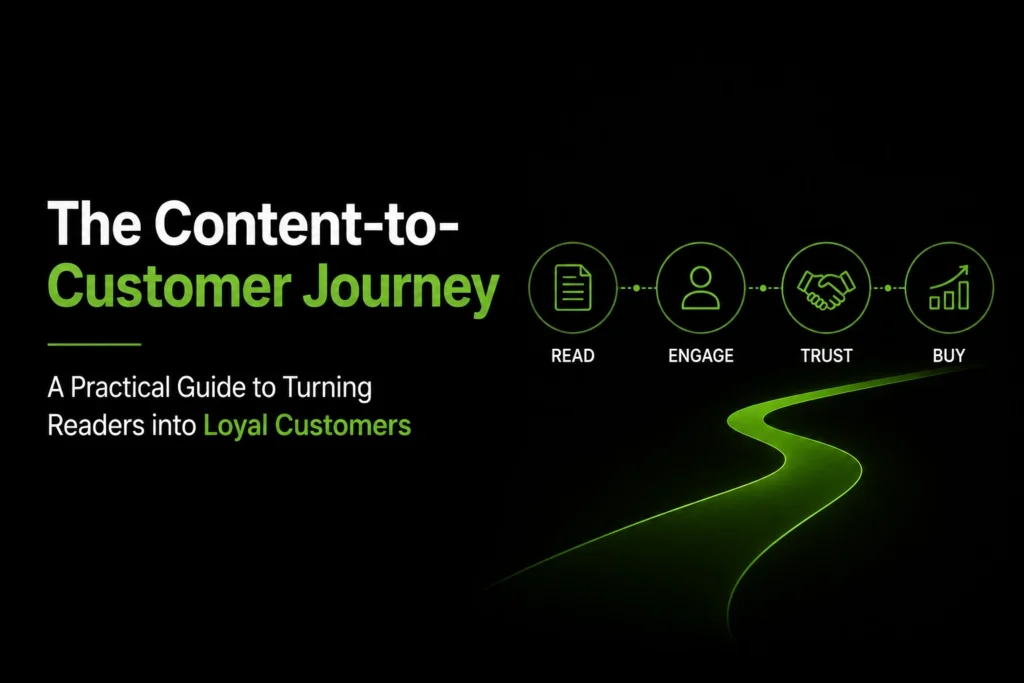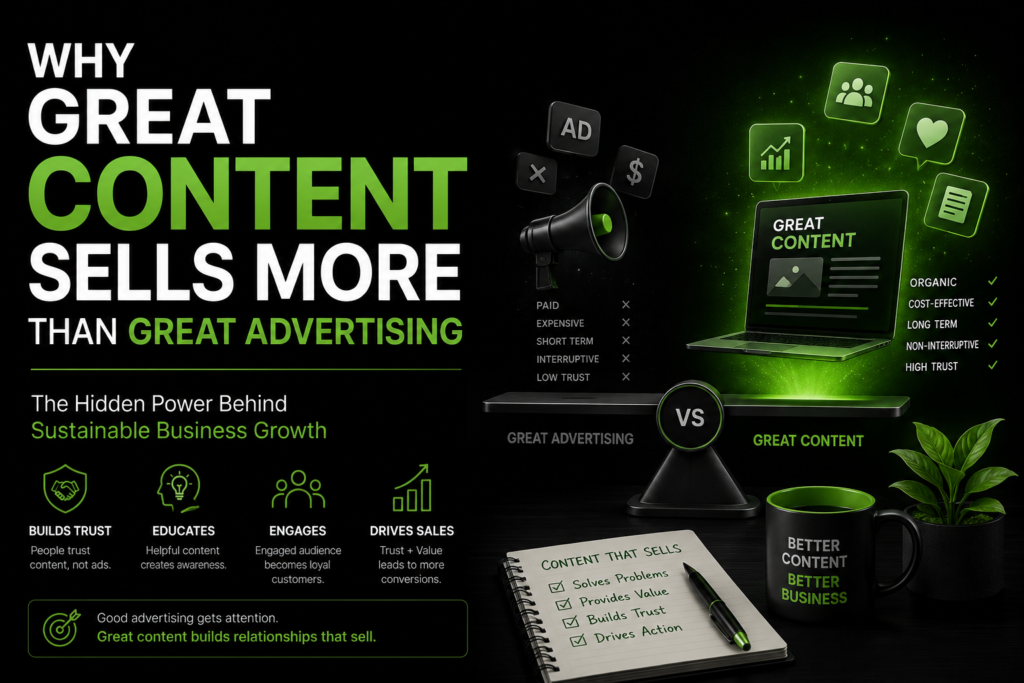
Why Great Content Sells More Than Great Advertising: The Ultimate Guide to Building Trust, Driving Sales, and Creating Long-Term Business Growth
Introduction: Why Content Has Become the Most Powerful Marketing Asset The digital marketing landscape has Content Marketing transformed dramatically over the past decade. Businesses once relied heavily on television commercials, newspaper advertisements, radio promotions, and flashy online ads to attract customers. While these methods still generate visibility, they no longer guarantee customer trust or long-term success. Modern consumers have become more informed, selective, and skeptical. Before making a purchase, they research products, compare brands, read reviews, and consume educational content. Consequently, businesses must earn attention rather than simply buy it. This shift has made content one of the most valuable assets a business can create. Great content does far more than promote products—it educates, inspires, solves problems, and builds credibility. Unlike traditional advertising, which often disappears once the budget runs out, quality content continues generating value for months or even years. Therefore, companies that prioritize valuable content consistently build stronger customer relationships, increase organic traffic, and generate higher-quality leads. In today’s competitive digital world, businesses that educate before they sell are the ones that win. This article explores why great content consistently sells more than great advertising and how businesses can use this strategy to achieve sustainable growth. 1.Advertising Captures Attention, but Content Earns Trust Advertising is designed to interrupt people. Whether it appears as a social media advertisement, a YouTube pre-roll, or a banner on a website, its primary goal is to capture attention quickly. Although attention is important, it rarely creates lasting customer relationships on its own. Great content, however, takes a completely different approach. Instead of interrupting people, it attracts them naturally by answering questions and solving problems. A helpful blog article, an educational video, or a practical guide immediately provides value without demanding anything in return. As a result, readers begin to trust the business behind the content. Moreover, trust has become one of the strongest factors influencing purchasing decisions. Customers are far more likely to buy from brands that consistently educate them than from businesses that only promote products. Therefore, while advertising may create awareness, content creates confidence. 2.Customers Buy Knowledge Before They Buy Products Every purchasing decision begins with a question. A customer may ask how to improve website traffic, increase sales, or choose the right marketing strategy. Instead of searching directly for products, people usually search for answers. Businesses that publish educational content position themselves exactly where customers begin their buying journey. Rather than forcing promotional messages onto audiences, they become trusted sources of valuable information. Consequently, customers develop positive impressions long before making purchasing decisions. Furthermore, informative content removes uncertainty. It explains complex concepts, compares available solutions, and helps readers make informed choices. Therefore, when customers eventually decide to purchase, they naturally prefer the business that has already helped them understand the problem. 3.Great Content Creates Long-Term Value While Advertising Has an Expiration Date One of the biggest differences between content marketing and traditional advertising lies in longevity. Paid advertisements stop producing results as soon as businesses stop paying for them. Once advertising campaigns end, website traffic and customer engagement often decline immediately. High-quality content behaves differently. A well-researched blog article can rank in search engines for years. Educational videos continue attracting viewers long after publication. Comprehensive guides become valuable resources that customers repeatedly revisit. Additionally, evergreen content continuously generates organic traffic without requiring ongoing advertising expenses. Every article becomes a permanent digital asset that contributes to long-term business growth. Consequently, businesses enjoy increasing returns on their initial investment while reducing dependence on paid promotions. 4.Storytelling Makes Content More Memorable Than Advertising People naturally remember stories better than promotional slogans. While advertisements often focus on features and offers, content allows businesses to communicate through meaningful narratives that create emotional connections. Stories help customers visualize real situations, understand challenges, and appreciate solutions. For example, sharing a customer success story demonstrates practical value far more effectively than simply claiming a product is effective. Moreover, storytelling humanizes businesses. It reveals experiences, values, and authentic perspectives that advertisements often fail to communicate. Consequently, audiences develop stronger emotional connections, increasing both customer loyalty and long-term brand recognition. 5.Content Builds Authority That Advertising Cannot Buy Authority is earned through expertise, not advertising budgets. Businesses become industry leaders by consistently sharing valuable insights, practical advice, and original perspectives. Every informative blog post, educational video, or detailed case study demonstrates professional knowledge. Over time, audiences begin viewing the business as a trusted authority rather than simply another company trying to sell products. Additionally, strong authority improves customer confidence. People naturally trust experts more than advertisers. Therefore, businesses that invest in educational content often experience higher conversion rates because customers already recognize their expertise before making purchasing decisions. 6.Search Engines Reward Helpful Content, Not Promotional Messages Search engines exist to help users find the most useful information available. Consequently, websites that publish high-quality content receive better opportunities to appear in search results. Every optimized article creates another chance for potential customers to discover a business organically. Unlike paid advertisements, which disappear after campaign budgets expire, search engine rankings continue generating visitors around the clock. Furthermore, consistent publishing strengthens website authority over time. Search engines recognize businesses that regularly provide valuable information, rewarding them with improved visibility. Therefore, content marketing not only supports customer education but also strengthens long-term SEO performance. 7.Valuable Content Improves Every Stage of the Customer Journey Modern customers rarely make immediate purchasing decisions. Instead, they move through several stages, including awareness, consideration, evaluation, and finally, conversion. Great content supports customers throughout this journey. Educational articles introduce potential solutions during the awareness stage. Comparison guides assist decision-making during evaluation. Case studies and testimonials strengthen confidence immediately before purchase. As customers progress through each stage, valuable content answers new questions while reducing uncertainty. Consequently, businesses guide potential buyers naturally instead of relying solely on aggressive sales techniques. 8.Content Creates Conversations Instead of Interruptions Traditional advertising usually communicates in one direction. Businesses deliver promotional messages, while audiences either respond or ignore them. Although advertisements increase visibility, they rarely encourage meaningful discussions. Content marketing creates